
The IWC watchmaking company, which is based in Switzerland, ship their watches all over the world. Where perfections meets watches. For the last 150 years, this watchmaking company has pushed innovation and technology to the very edge, resulting in the luxurious IWC watches you can buy today.
Their close attention to the finest of details has resulted collections of popular, high-quality watches.
IWC Schaffhausen has been making watches in Switzerland since 1868. The collections offer quite different bases to start, from the clear, aviation-inspired dials of the Pilot’s Watches to the more understated Portofino.
Explore pre-owned IWC watches for sale in South Africa at Topwatch and compare the models listed in our catalogue, as well as our other brands like Cartier watches.
Consider how you plan to wear the watch, then compare the references in the collection. The individual watch’s size, condition, service history and supporting documents should all be assessed against your preferences.
| Collection | Character | Check before buying |
|---|---|---|
| Portugieser | Dressier, clear dials | Thickness under a shirt cuff |
| Pilot’s Watches | Aviation-inspired, legible | Case size, especially Big Pilot |
| Ingenieur | Sportier, integrated bracelet | Bracelet fit and spare links |
| Portofino | Understated, discreet | Profile on complicated versions |
| Aquatimer | Dive watch, timing bezel | Current water-resistance test |
The Portugieser combines a dressier appearance with clear dials and, on many references, generous case proportions. You’ll find relatively simple layouts along with chronographs and more complicated models.
The Portugieser is a good option if you want a watch for the office, dinners and everyday wear. Check the thickness as well as the diameter, particularly if you’d like it to sit comfortably under a shirt cuff.
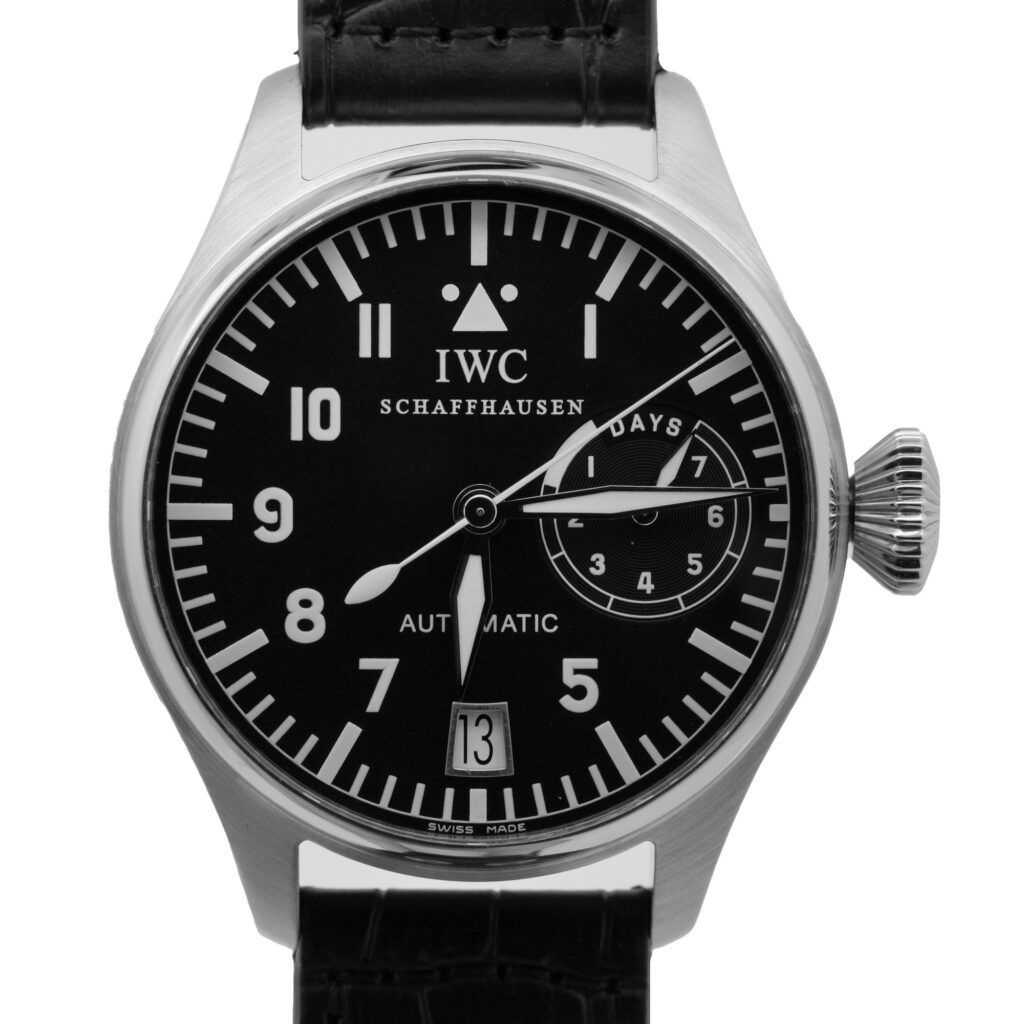
IWC Pilot’s Watches draw on aviation instrument design, with clear legibility that makes them appealing to many buyers. Depending on the reference, you might find a straightforward time-and-date display, a chronograph or additional travel functions.
A larger Big Pilot will feel quite different from a smaller model. Compare the case dimensions and strap before deciding what works on your wrist.
The Ingenieur has an engineering-led heritage and a sportier character. Relevant references feature an integrated bracelet, where the bracelet and case form a continuous design.
Check how the first bracelet links sit against your wrist and whether enough links are included for a comfortable adjustment. Older Ingenieur references can differ substantially from newer models, so assess the specific watch.
If you prefer a more understated design, the Portofino is a good option, with restrained styling that works well for formal occasions and everyday settings where you want something discreet. Some references offer a slimmer profile, while chronographs and other complicated versions can be more eye-catching.
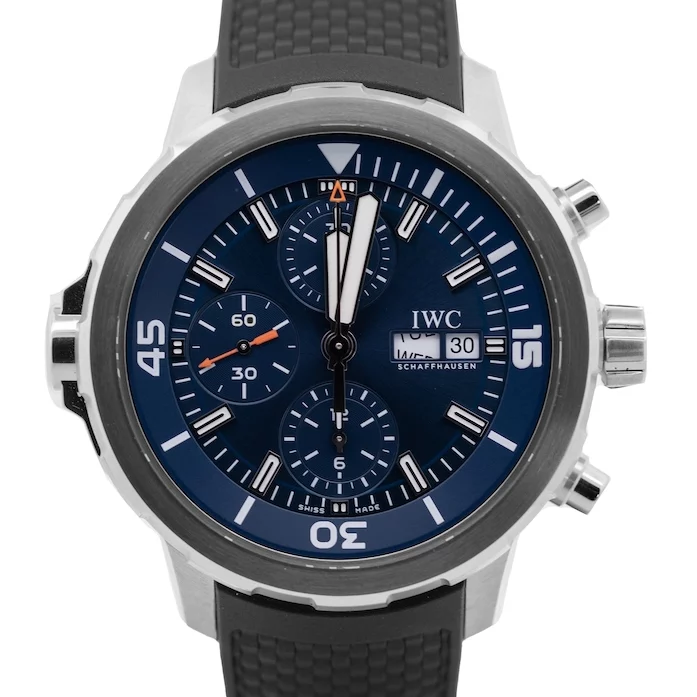
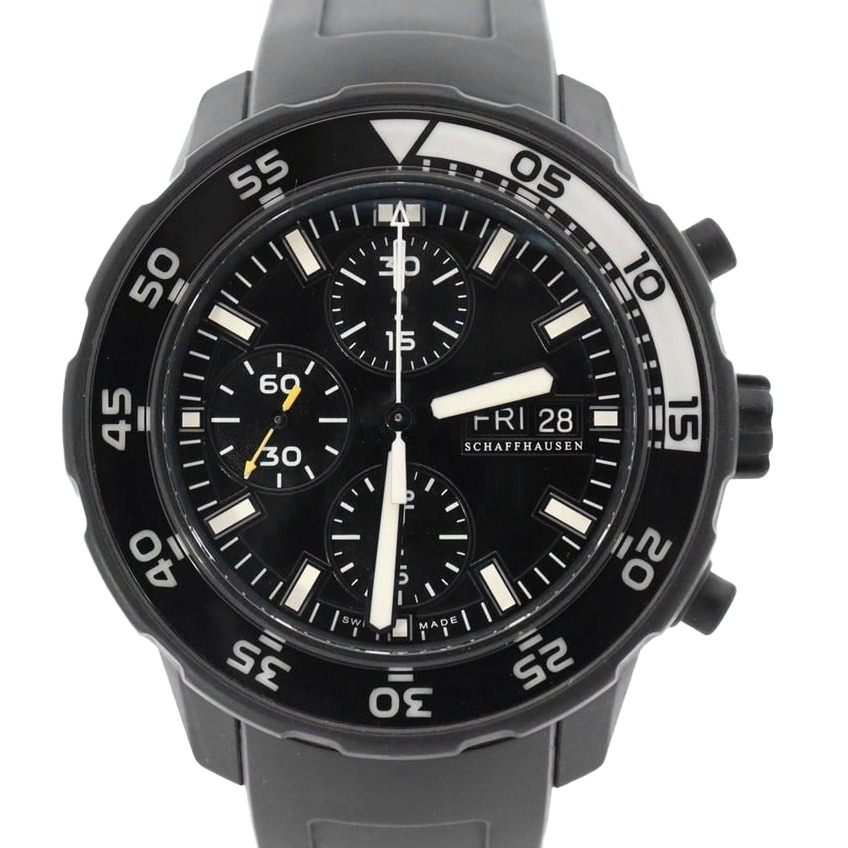
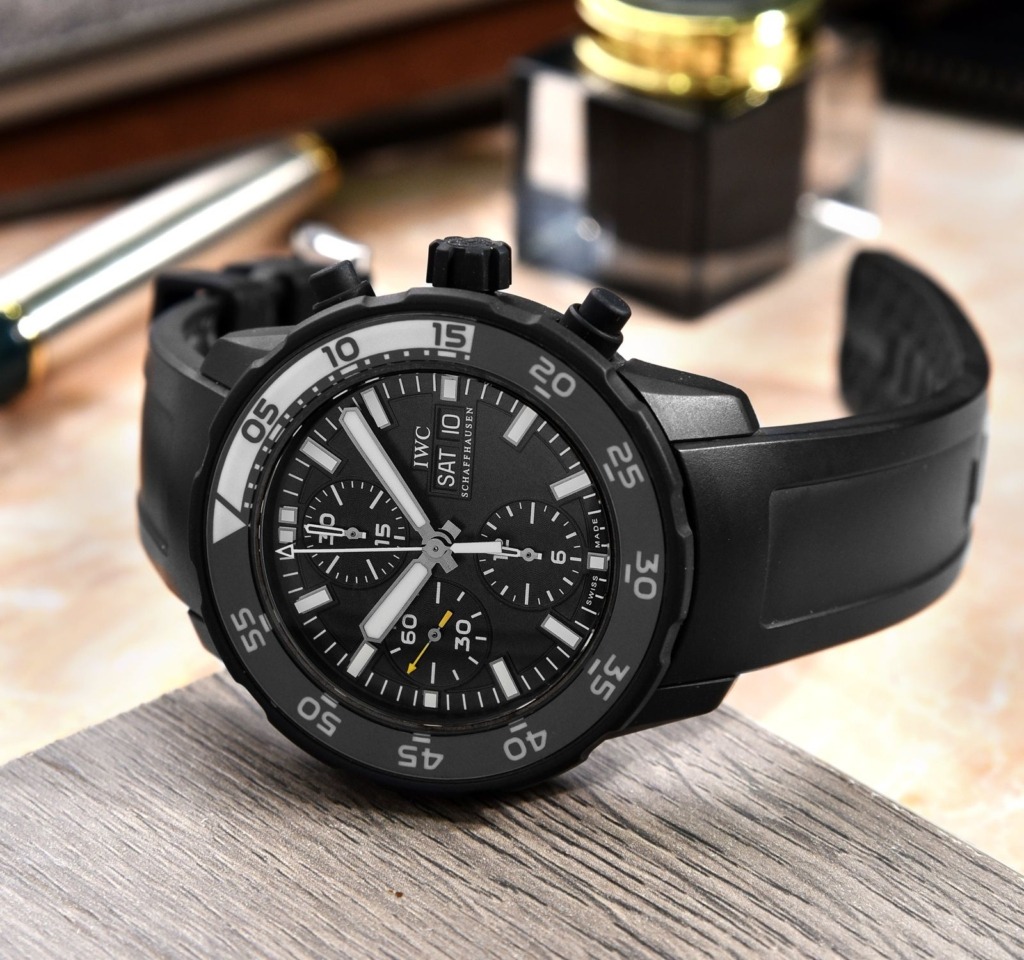
The Aquatimer is IWC’s dive-watch collection, with timing bezels and water-resistance specifications that vary by reference.
Planning to swim with yours? Establish its current tested water resistance and whether the fitted strap is suitable. An original specification doesn’t tell you the present condition of a pre-owned watch’s seals.
Thickness determines how high the watch sits. Lug-to-lug length affects how far it extends across your wrist, while the bracelet or strap changes how securely the watch sits. Ask for measurements and wrist photographs if you can’t try it on. With a bracelet model, confirm the current length and whether spare links are included.
An automatic mechanical watch winds through wrist movement, although it may need winding and setting after time off the wrist. A manual-winding watch needs you to wind it by hand according to its instructions.
A chronograph adds a stopwatch function. Other complications can display an additional time zone or calendar information. These features can be useful, but they also bring different setting procedures and servicing requirements.
Look at the case edges, bezel, dial, hands and crystal. Ask about dents, scratches, previous polishing and any known replacement components. On bracelet models, check the clasp, links and signs of wear or looseness.
Polishing removes material and can alter a case’s original shape, so a freshly polished appearance isn’t always a better result.
Original box and papers can add useful background and can influence resale appeal. Check which documents are included and whether their identifying details correspond with the watch. A warranty card isn’t a full service history, and packaging alone doesn’t prove authenticity.
Before committing, ask what has been inspected and what evidence supports the assessment. Useful questions include:
Ask Topwatch for the inspection information available for the watch you’re considering. Box and papers should support a professional assessment, not replace it.
A mechanical watch needs care, but there’s no single service interval for every pre-owned IWC. Follow IWC’s guidance for your model and take its condition, performance and wearing habits into account. Ask when the watch was last serviced, who completed the work and whether an invoice is available.
Get a diagnosis and quotation before agreeing to repairs.
Water resistance also needs ongoing attention. IWC recommends testing it at least annually. Before swimming, confirm that the watch has a recent satisfactory test and an appropriate strap.
Topwatch’s watch repairs and refurbishment service offers diagnosis and quotations, with collection or drop-off options. Ask whether your IWC reference can be supported and whether any work needs to go to IWC or an authorised service centre.
Before buying, request the applicable warranty terms in writing. A retailer warranty and any remaining manufacturer warranty are separate arrangements.
Browse the IWC watches listed at Topwatch and open the individual product pages to compare references, photographs, prices and included accessories. You can also contact Topwatch for information about a specific listing.
We also buy IWC watches. If you’re considering selling, start with Topwatch’s sell-your-watch form and select IWC. Have the reference, clear photographs, condition details and information about box, papers and service history ready to support the assessment.
The value of a second-hand IWC depends on the reference, condition, completeness and market demand. An advertised asking price elsewhere isn’t always an achievable selling price.
Yes, if the individual watch suits your needs and its condition supports the price. Buying pre-owned can give you access to discontinued references and different price points. Compare supporting documents and warranty terms alongside the purchase price.
Check diameter, thickness and lug-to-lug length together. The crown, bracelet design and strap fit also affect comfort. Try the watch on where possible, or ask for measurements and wrist photographs before deciding.
Use a qualified watch specialist who can assess the reference, serial details, movement and relevant components together. Photographs and documents can support the assessment, but a neat dial or convincing box isn’t enough to establish authenticity.
They’re useful, but their absence doesn’t make a watch inauthentic. Their presence doesn’t guarantee authenticity either. Look at the professional inspection and available history, and understand how missing accessories or documentation affect the purchase.
Follow IWC’s recommendations for your specific watch. Service needs depend on condition and how it’s worn. Water-resistance testing is separate: IWC recommends having that checked at least once a year.
Some references may retain value better than others, but future prices aren’t guaranteed. Demand, purchase price, condition, originality and completeness all play a role. Factor in servicing and selling costs, and choose a watch you want to own rather than relying on appreciation.
Confirm the exact reference, current availability, total price and seller’s identity. Ask about authentication, condition, service records, included accessories and warranty terms. For delivery, establish the insurance arrangements and returns process. If you intend to swim with the watch, ask for information about its latest water-resistance test.
An automatic watch winds through the movement of your wrist, while a manual-winding watch needs regular winding by hand. An automatic may still need winding and setting after time off your wrist. Check the instructions for the specific reference so you know what its everyday care involves.
Ask how polishing has affected the case. Polishing removes material, and extensive work can soften edges or alter the watch’s original shape. A few surface scratches may be preferable to heavy polishing, depending on your preferences. Request clear photographs and details of any refurbishment before deciding.
An authentic watch may have legitimate service replacement components, but you should understand what changed and whether the work is documented. Ask the seller to distinguish service replacements from aftermarket parts and explain how they affect the watch’s originality and asking price.







WhatsApp us